
What makes a credit union relationship special? Is it being a member and saying “I own it”? Is it some aspect of value which a may be important to a member?
Many organiations use the term member when seeking consumer business. But why do members often continue to carry their credit union’s credit card or keep an account open when they move away and take the bulk of their business elsewhere?
Sometimes it is easier to understand what matters in a relationship from seeing another life situation.
Leaving the Country
Last Sunday I received an email from an Ukrainian working for an American-Ukraine support group. The real name and city have been changed. It read in part:
Two years ago my wife and I along with a local church helped the Melnyks family settle into an apartment in Baltimore The family had three children and a fourth on the way. The father worked in construction in Ukraine, a skill much in demand here. The mother was a music teacher.
Their relocation was sponsored by a local family. Several other US families, the DC church and a number of Ukrainians living here helped to support their move as refugees to America.
Why Did the Family Leave?
The family could have filed appeals. Their 18 month old is an American citizen. I do not know how they made their decision and all the factors they considered.
But as an outsider looking at the news about America today, our national leaders attitude to immigrants, and the ever-threatening presence of ICE even with legal migrants, I suspect one factor may have been a simple human emotion. They did not feel they belonged here.
Belonging is a sense of comfort, a place of welcome where we are known and an aspect of our identity. It is like ownership, but more deeply personal and individual. The emotion cannot be generated via creative marketing appeals. It is the result of experiences that cause one to feel part of an organization.
The Consequences of Belonging
When we do not feel we “belong,” we no longer attend meetings, revisit past places of residence, go to church, or even follow organizations that were once important parts of our lives. For example schools or colleges where we invested years in learning, or with organizations where we worked for decades and may have made meaningful contributions.
Some organizations do try to retain and honor prior affiliation and relationships. The event can be as simple as invitation to the organization’s annual meeting or holiday celebration. Sometimes this is through reunions, newsletters to keep alumni informed or even recognizing former members for prior service. Even when done for practical purpose such as alumni contributions, the result will depend on whether there is a sense of an enduring relationship.
But more often it is to recognize that a sense of belonging ensures the past, present and future are all vital to a community, an organization, or even a family’s sense of identity and meaning
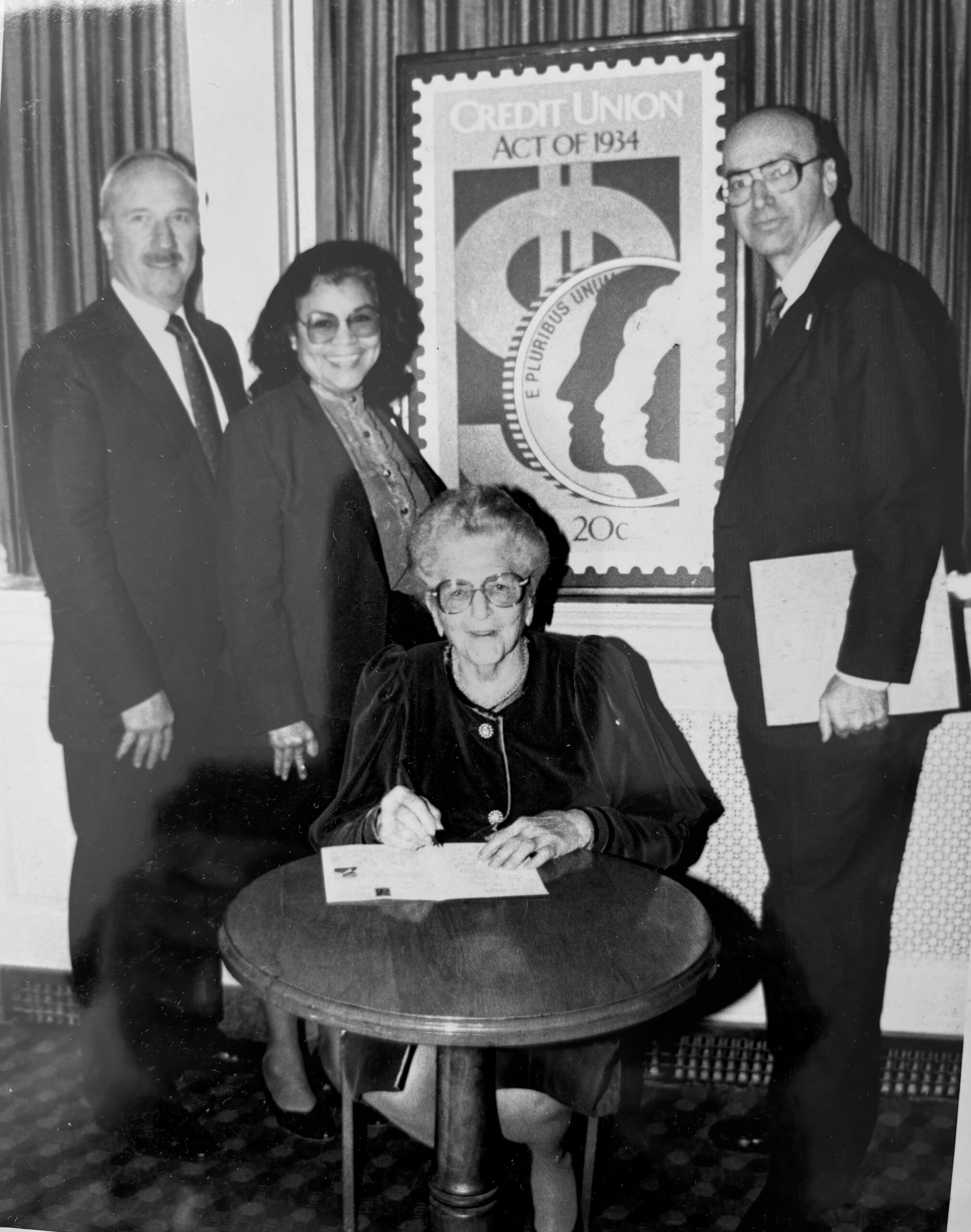
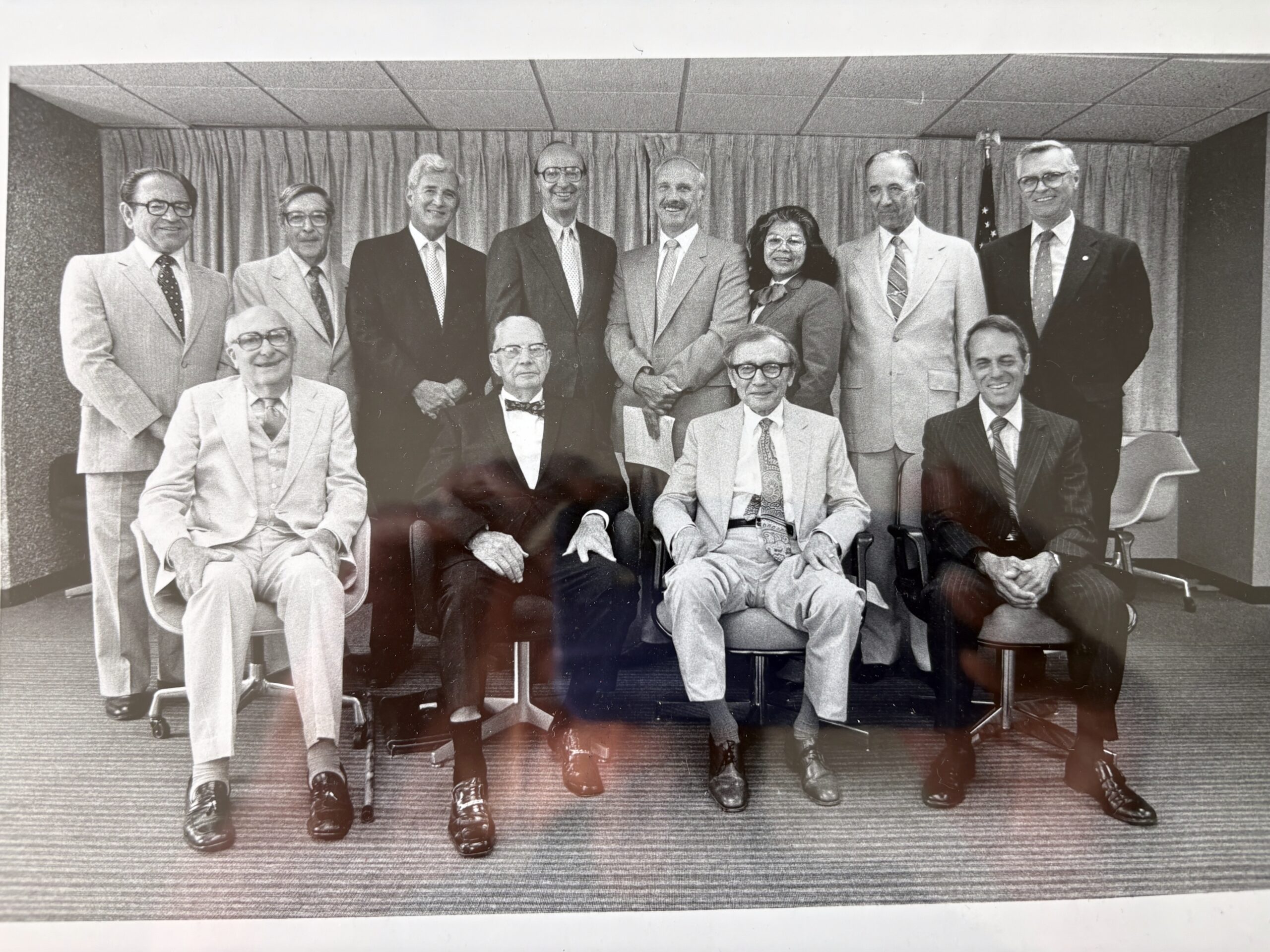
In his many leadership roles, and especially on the national stage at NCUA, Ed Callahan make a continuing very public effort to recognize and honor those who came before him. Sometimes in public events such as the celebration of the Federal Credit Union Act’s 50th Anniversary. Or the simple act of attending the funeral of a nun in Youngstown, Ohio who had been a teacher while he was a student.
February 19, 1984, NCUA Chairman Ed Callahan and fellow board members welcome Catherine Filene Shouse, niece of Edward Filene, on the first day of issue for the credit union stamp. Salem, MA.
June 1984, Washington DC. Current NCUA board members welcome back prior NCUA administrators, General Counsels and senior staff to celebrate the 50th Anniversary of the passage of the Federal Credit Union Act. NCUA headoffice 1776 “G” Street.
Whether People Go the Extra Mile, or Leave
A sense of. belonging creates loyalty and the willingness to go the extra mile whether this be in one’s relationship with others, a volunteer commitment, with an employer, a community or even one’s home country.
It is a vital skill that defines effective leadership, especially in a democracy. It creates trust and mutual respect. It is not a transactional relation that can be bought. It is an earned outcome.
And when push comes to shove sooner or later in all our decisions about where we invest our time and resources, it will be in those situations where we feel we belong. For this Ukrainian family at this time, America was not going to be their future homeland.
This loss is America’s. It should remind us of the many and often much less consequential life situations where we are responsible for others feeling that they belong. Like being part of your credit union.