By E.C. Harrison

Credit unions were feeling out the uncertainty of financial markets on Tuesday morning, Sept. 11, 2001. The dot-com bubble had burst. Layoff announcements followed a steady drumbeat. Many suspected the economy was in a recession. But looking out over Washington, D.C., from the 10th floor of the Connecticut Avenue offices of Callahan & Associates, it was a beautiful day with a clear view the city – bustling Farragut Square below and off in the distance, the White House and the control tower at Reagan National Airport.
Thunderstorms had swept through Washington on Monday. The grip of summer was finally loosening.The day dawned clear and mild. Chip Filson, president and co-founder, remembers those azure skies. It was going to be another busy day preparing for the all planning meetings. His wife was the press officer for a three-day annual economic conference somewhere in New York City. His daughter’s wedding was four days away.
“I remember the day as being very, very glorious. It was clear. It was a wonderful, bright fall day. Filson said. “It was one of those days that you enjoy being in the office and watching how things are unfolding.”
On the West Coast
Nearly 2,800 miles across the country in Portland, Oregon, Wendell “Bucky” Sebastian , a co-founder of Callahans, now CEO at GTE Federal Credit Union, was preparing for a quarterly meeting of Open Financial Solutions (OFS). The CUSO was a technology R&D effort formed by a group of the country’s largest credit unions. Soon he’d reconnect with Ed Callahan, co-founder and namesake for the firm who previously served as chairman of the NCUA Board. Callahan had been CEO of Patelco Credit Union in California since 1987. He was a little over a year away from retirement.
The CUSO’s mission was to help credit unions work together to take advantage of rapid technology innovations affecting the financial services industry. It was was a pivotal time for moving forward together. “There were nine of us that were interested in a faster turnaround with our various IT providers, with what we wanted to get done and for our members,” Sebastian said.
But before he could leave for the meeting, his secretary called from Tampa, Florida, to let him know, “All hell was breaking loose.”

CAPTION: Smoke billows from the Twin Towers on 9/11 as New Yorkers flee to safety.
The Attacks Hit Home
Most Americans watched the Sept. 11 attacks unfold on television. Soon after Filson’s daughter, Alix, alerted her fiancé Scott Patterson that the news was reporting that a plane had crashed into the World Trade Center’s North Tower at 8:46 a.m., word spread around the Callahan office. The only television – usually turned to Bloomberg News — became the focal point. Live cameras trained on smoke billowing from the North Tower.
“I remember just becoming aware of this story about an airplane running into the twin towers in New York, and I thought, how does an accident like that happen today? It just seemed unusual, but an accident for sure,” Filson recalled.
After a second airliner crashed into the South Tower at 9:03 a.m., everything changed.
“Slowly, as things unfolded, we learned it wasn’t an accident. And then things seemed to escalate really fast. After the second plane, it was clearly an attack of some sort,” he said.
The event quickly became very personal for Filson. Patterson, his future son-in-law who had joined the firm in 1999 as an intern and was working on its website and internet strategy at the time, asked, “Chip, isn’t Joan in New York?”
Patterson remembers Filson looking up, his eyes widening as he processed the implication.
Joan was working as the public affairs officer for the National Association for Business Economics (NABE). The organization was holding its annual meeting titled NABE in a New York Minute. The conference was in a ground level ballroom at the Marriott World Trade Center Hotel between the two towers. The night before, she had visited the Windows on the World restaurant atop the World Trade Center with press covering the conference.
The first sign of trouble came when she heard a “terrific boom” outside the hotel. At first, some speculated that it might have been a gas explosion. Attendees left, some to go their rooms but most evacuating the hotel. No hotel announcement, just the instinct to leave.
She recalled that one man arrived late for the NABE meeting by taxi. “He jumped out of the taxi, and seconds later, a piece of stone hit the taxi and crushed it,” she said.
Once outside the Marriott, the magnitude of the event became clearer. She recalled seeing objects falling from the tower windows. At the time, she couldn’t comprehend that some of what she was seeing were people.
“You can’t process that there are bodies, but they were,” she said.

CAPTION: Fires at the Pentagon dominate the Potomac River and the Washington, D.C., skyline.
At 9:37 a.m. the attacks became real for residents of Washington, D.C., when the third plane crashed into the Pentagon. Employees at Callahans watched as smoke billowed from the building. They reached for their phones as rumors began racing through the office.
“People were saying, ‘Oh, I heard there’s a plane coming up the Potomac. You better get out of there.’ There were all kinds of rumors. I don’t know where people were getting all kinds of wild information,” Patterson recalled.

The Long Way Home
On the West Coast, the CUSO meeting of credit union executives never kicked off. All present stayed glued to the television. After the fourth hijacked jet crashed in rural Pennsylvania at 10:03 a.m. Eastern time, they realized that they needed to get home right away.
It was easy for some including Tom Sargent, CEO of First Tech Federal Credit Union, who was hosting the meeting in Portland, and Gary Oakland, CEO Boeing Employees’ Credit Union, facing a relatively short drive back to Tukwila, Washington. Both Callahan and Rudy Hanley, CEO of Orange County Teachers Federal Credit Union had to make it back to California.
But with all U.S. commercial and private airline flights grounded in an unprecedented action by federal authorities, returning home became much more difficult for the rest of the group. Dan Kampen, CEO of U.S. Central Credit Union, had to return to Kansas. Doug Ferraro, CEO of Bellco Credit Union, had to make it to Denver. Sebastian and Tom Dorety, CEO of Suncoast Schools Federal Credit Union, had to drive all the way across the country to Tampa.
Fortunately, Ferraro had a rented SUV and offered to drive the stranded executives as far as he could. He told them, “Well, I can get you to Denver.” Six of them piled in and headed east.
“And we just drove. I mean, we just drove all night,” Sebastian said.

CAPTION: Wendell “Bucky” Sebastian
The group passed through Oregon, Idaho and Wyoming on pitch black highways, listening for updates on the radio. It all felt “surreal,” he recalled. When they arrived in Denver the next day, all flights were canceled and all rental cars were taken. Ferraro offered the men a repossessed vehicle from his credit union – a late-model Lincoln Town Car with blacked-out windows, no license plate and a bobble-head dog on the dashboard.
The plan was to drive the repo all the way to Tampa, dropping CEOs off along the way, then sell it at a Tampa auto auction and send the proceeds to Bellco. The only problem, he said, was that the car “clearly had been used to run drugs.”
One member of the group took one look at the Lincoln and asked, “What if we get stopped?” But the conclusion was the police had much bigger concerns that day.
“You know what we realized? Nobody’s going to stop us,” Sebastian said. After dropping off part of their group in Kansas City, they drove straight through until they “couldn’t drive any farther” and stopped at a motel in Macon, Georgia. It was their first sleep since the attacks.
Sebastian and Dorety headed south early that morning. But as they approached Tampa, they noticed that they were the only ones headed south. Lines of cars were leaving the bay area in the other direction. Sebastian soon learned that at the end their hurried cross-country home, on the same morning they arrived, Tropical Storm Gabrielle made landfall with 70 mph winds in Venice, Florida, just south of Tampa.
Sebastian called his vice president at GTE Federal Credit Union and learned he had already made the decision keep the doors open that Friday.
“He told me: ‘It’s a Category 1, and we’ve got to serve our people, so we’re not closing,'” Sebastian recalled. “I said, ‘That’s fine. I’m leaving it up to you.”
Overcoming the Fear
In New York City, Joan Filson’s journey home from the Ground Zero had taken more than a day, traveling by foot, by boat, a stranger’s car and an Amtrak train. Like so many others in New York that day, as the towers burned, she started walking with her NABE group toward the Hudson River. But soon she became separated one part going North and her group to pierside.
As massive cloud of black smoke approached, she held a light jacket over her face as a makeshift mask. At the river the second plane had not yet hit. Joan and a friend talked about swimming to NJ if need be because the water was still warm. Eventually she boarded one of the New York Waterways ferries evacuating people from lower Manhattan. Even aboard the boat, the danger didn’t seem over. Passengers watched the skies, saw the black smoke growing higher, and feared “there could be an attack from on high.”

Once in New Jersey, the car rental agencies were mobbed. A young woman she had met took Filson to her apartment for a while so she could calm down. She finally managed to get word that she was OK to her husband though economist Diane Swonk’s Bank One’s office uptown. Renting a car was impossible, but she caught a ride south to Philadelphia with a stranger in the car rental office and spent that night with friends, whose daughter raced across Philly to pick her up at the airport, where she had been dropped. The next day, she boarded a train for home in Bethesda, Maryland.
Reflecting on the ordeal, she remembered people commenting on the amount of dust on their shoes. She doesn’t remember hearing the towers’ collapse or experiencing the dust cloud. But she added, “Maybe I’ve just blotted all that out.”
Filson and his wife didn’t get to speak to each other until she returned that next day. In downtown Washington on Tuesday, Callahan employees had a clear view of the traffic leaving the city and flooding the Metro. By lunch time, he gave everyone the option to go home to be with their families.
Keeping the Doors Open
Filson stayed behind, manning the phones.
“If there’s panic, that’s what the terrorists want,” he said. “I decided to stay and answer the phones to do what I can to assure the credit union community that we’re still here.”
That night, President George Bush addressed the nation and assured the American people that two things were still functioning – the federal government and the U.S. financial system. “Our financial institutions remain strong, and the American economy will be open for business, as well,” he said.
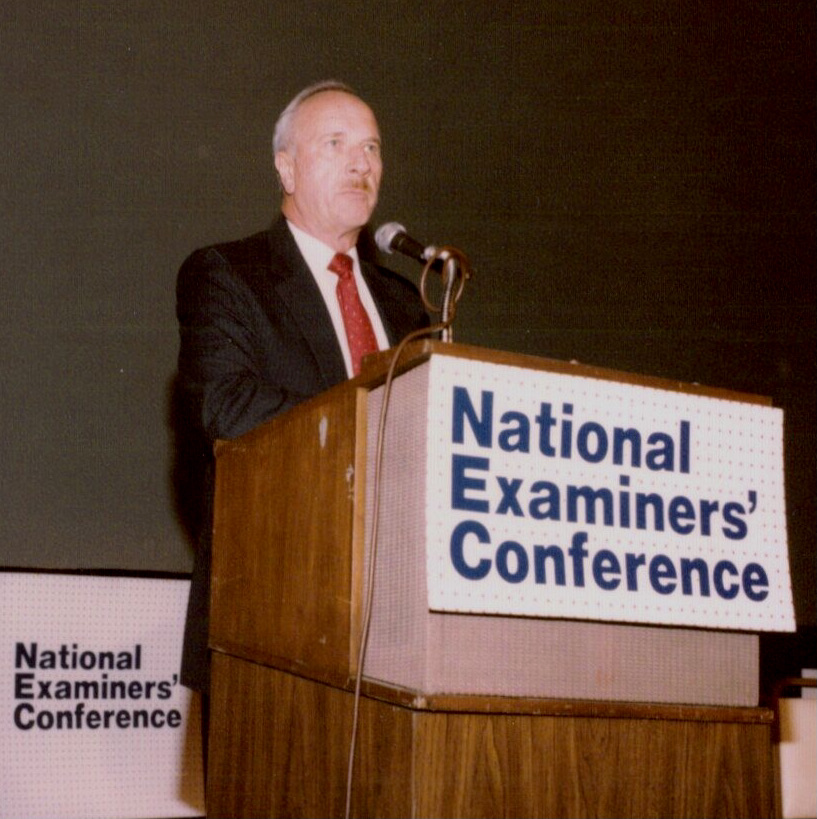
CAPTION: Ed Callahan
While there were fears that the crisis could trigger a run on the banks and credit unions, it never came. Weeks later, Callahan wrote that it was important for Patelco to keep its doors open that week. “One was symbolic, of course: We would show a face of continuity, and we would not take an action that might lead others to succumb to fears about their savings. The other was functional: We really were there to carry out transactions, provide cash or whatever else people wanted.”
Four days after he watched the Pentagon burn from his office window, Scott and Alix Patterson married – as planned. Many invited guests – including Patterson’s best man in Texas – couldn’t attend because their flights were canceled. But they invited their church friends, neighbors and many other well wishers.
Patterson recalled that those in attendance welcomed the chance to do something joyful after spending days glued to television coverage, wondering what had happened and whether the country was at war. The newlyweds left, as planned, for their honeymoon in Greece. There, they experienced the international outpouring of concern and support for America firsthand.
“On our honeymoon, being abroad and being Americans, we felt the whole world was shocked and upset about what had happened, especially to the United States,” Patterson said.

CAPTION: Newlyweds Alix and Scott Patterson, surrounded by family
‘The Past Is Always With Us’
For Sebastian, 9/11 reinforced how little Americans understood the Middle East and other parts of the world. The attacks caught us by surprise and demonstrated the consequences of our limited knowledge. But it also brought Americans closer together – perhaps closer than any other time since the surprise attack on Pearl Harbor during World War II.
“We had to work together. We had to stick together. We had to cooperate,” he said. Like the mission of credit unions, he said, “all of the things that we can do cooperatively are almost always done better.”
The 9/11 attacks revealed what people are capable of at their best – courage, sacrifice, generosity and unity. That is the part we must never forget.
“The reaction to 9/11 is the most powerful example of what a united country and its people can do,” Filson said. “But it shouldn’t just be just because we’re threatened. It should be because of who we are and what we believe in.”
For many younger people, born after 9/11, other life experiences have crowded out our past,”he said.
“But forgetfulness or unfamiliarity of pivotal events has consequences,” Filson said. “Events do have long-term impact. People will have different views of what those consequences were for good or for ill, but the past is always with us.”

CAPTION: Newspapers across the country declare the historic implications of the 9/11 attacks.
E.C. Harrison is a freelance writer with more than 25 years of experience covering a wide range of topic including credit unions, financial services, technology