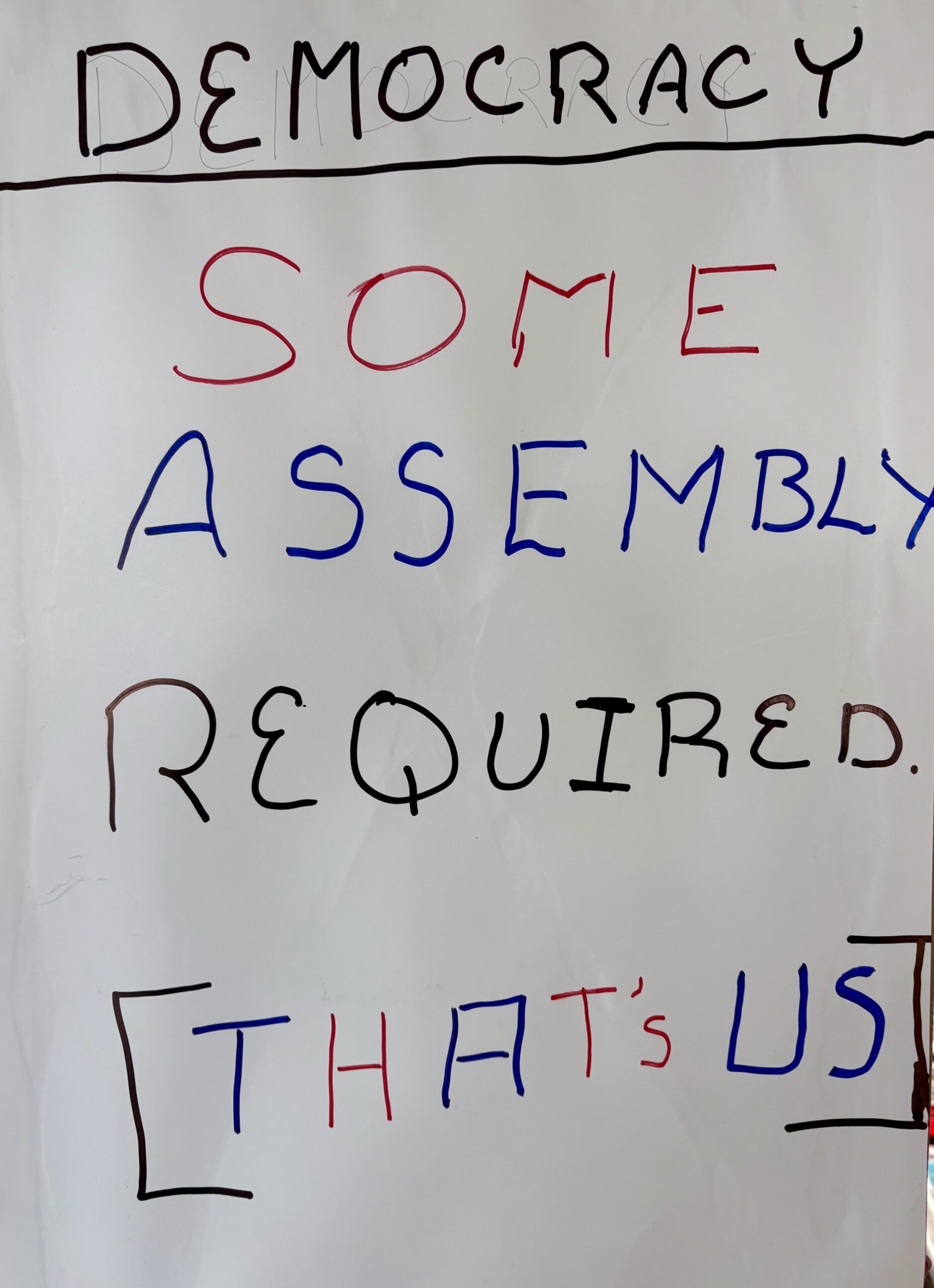
As I went downtown during rush hour yesterday, a gray haired, older lady appoached me with a small handout at the escalator. It was a snall flyer for where to stand locally in the No Kings rally this Saturday around the country at over 3,000 locations.
But democratic duties are not limited to national and local politics. Virtually all volunteer, non-profit and community organizations have some form of member oversight. This can be the elections of representatives or to changes in bylaws and/or structure.
If one owns any publicly traded stocks, it is likely there will be reminders of the annual meeting with proxy solicitation calls. In this case the voting is based on share holdings, but voting none the less.
Credit unions can learn from these other exercises in organizational governance. Especially what can happen when democracy is usurped by those in control at the moment.
The Tools of Democratic Oversight
Jim Blaine the former CEO, observed that an organized minority in authority will always defeat a disorganized majority. And democratic majorities are, by definition, rarely in unanimous agreement. Not everyone in Virginia thought the idea of Give Me Liberty or Give Me Death, was a great choice.
One of the most important monitors of our various democratic processes is the press. This can be public press and broadcasts, industry publications, bloggers and those using social media to raise concerns, and even individual actors writin opinions for their local outlets. Here is how the press is covering a story of usurpation of democractic control in a major local powerful institution.
Democratic Control Removed-A Press Investigation
Recently the Houstan Chronical completed a five-part investigative series of a takeover of one of the largest Baptist Churches in the city by its pastor. (link)
While the details are behind a paywall, here is a summary of events.
Houston’s Second Baptist Church, with about 90,000 members, is a church at legal war with itself, since a group of influential congregants calling themselves the Jeremiah Counsel sued church leadership in 2025.
They’re challenging revised bylaws established in 2023 that deny lay members a vote in important church decisions, including the selection of senior pastor Ben Young, son of the church’s popular long-time leader, Ed Young.
The bylaw change was in a single sentence that seemingly slipped by most people and put the church at odds with its own faith: “Members are not entitled to vote in person, by proxy or otherwise.”
With those 12 words, the congregation at the now 98-year-old church lost more than its vote. It parted ways with a core tenet of Baptist doctrine: democratic rule.
The revolt started when a group of members realized they had given away their authority to vote on church business after an election in which hardly any congregants participated.
It didn’t take long for several influential church members — who are now suing to reverse changes made in that crucial vote — to realize where the new bylaws came from. They bear a striking resemblance to the bylaws of Fellowship Church in Grapevine.
Fellowship Church in Dallas, is another megachurch with family ties to Second Baptist. Second Baptist quietly copied Fellowship Church’s bylaws — and silenced its members.
One article in the series is headlined: How Second Baptist Church sacrificed its Democratic Principles: ‘You can’t fire the king’
Democracy vs. No Kings
The human tendency to rule by authority versus the more complicated exercise of democratic leadership is present in all organizations. But especially in credit unions. Because money amd, its use, is combined with power.
The result is that boards and senior management strive to limit any meaningful say in their oversightand leadership roles. Nominations for board seats are controlled by existing directors and limited to the exact number of vacancies. No voting needed, just ask members to approve by acclamation.
But when there is the prospect of members rising up, the next step is to copy the practice of Second Baptist. Specifically change the bylaws to make it impossible for members to self-nominate or to challenge the board’s control of the election process.
In the traditional FCU bylaws, members can submit a petition with 500 names for board nomination or to call special member meetings. The top three credit unions by assets,Navy FCU, SECU (NC) amd PenFed all took steps to make this member option impossible. Instead of a fixed number, the bylaws were changed to require a percentage of total members to sign the petition.
PenFed’s change came after a self-nominated candidate qualified for election. SECU’s board changed its bylaws after members challenged the closed board process in an open election. The board changed the bylaws and election procedures to make the process very difficult for member-nominated candidates to qualify.
All three bylaw changes to the long standing democratic process were approved by the reglators with members having no say or even knowledge.
Democratic oversight takes integrity, character and continuous vigilance. It requires a free press in all forms to cover uncomfortable truths and lapses in duty by those in power. Power in terms of community and local influence and those charged with responsibility for public oversight.
Firing a Credit Union Leader
One of the landmark events in credit union land was when CUNA fired its presient. The story in brief:
Herb Wegner was an avid pilot and owned his own plane. He had an agreement with (CUNA) to be reimbursed the equivalent of a first-class ticket whenever he flew his own plane for work. However, disputes over these expenses became a major point of friction with the CUNA Treasurer, Fred Krause.
At a board meeting in 1979, Krause reportedly announced he was “tired of fighting Herb about airplane expenses” and unexpectedly moved to fire him on the spot. The motion passed, stunning most of those in attendance.
While there were other factors at play, today the highest honor credit unions bestow on their leaders is called the Herb Wegner award. An irony which shows the cooperative system’s ambivalence in managing its own shortcomings.
What Everyone Must Do.
Democracy takes practice which is the root of the word participation. Here is my sign for Saturday.